


Sustainability Menu

Economy
Environment
Social
Sustainability Menu
Economy
Environment
Social
Social
Social
Stakeholders Engagement
Stakeholders Engagement
Performance in Sustainably development in Society Responsibly
S6 Stakeholder Involvement and Participation
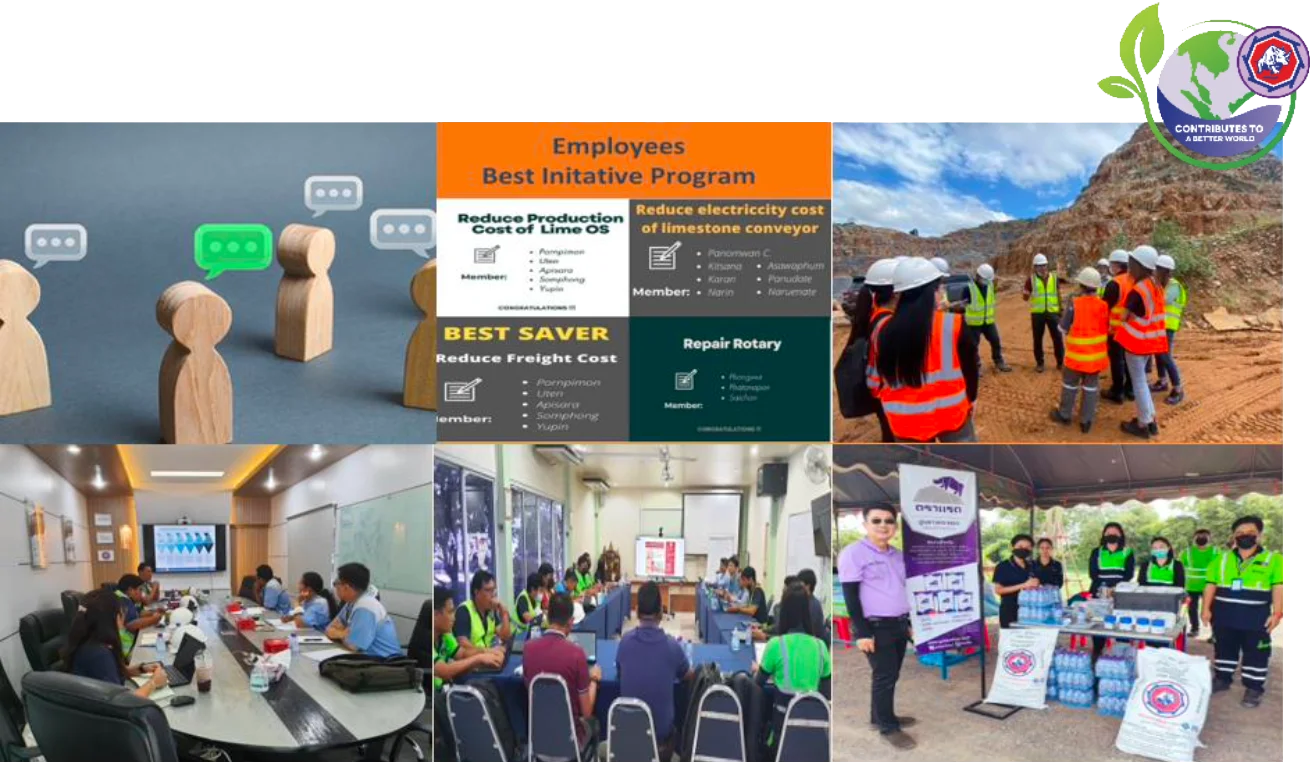
นโยบายด้านการมีส่วนร่วมของผู้มีส่วนได้เสียของบริษัท สุธากัญจน์ จำกัด (มหาชน)
Principles
Stakeholder engagement provides opportunities to further align practices with societal needs and expectations, helping to drive long-term sustainability. Engaging stakeholders in the dialogue to find out what social and environmental issues matter most to them will improve decision-making and accountability.
Guidelines
- The process includes:
1.1). Establish a policy to include and categorize all stakeholders
1.2). Prioritize and specify activities for each group of stakeholders including reporting to the board
The management adopts the framework from the Board, follows up performance and involves employees to participate in proposing ideas for activities or projects.
Stakeholders’ identification A method for systematically identifying stakeholder groups should consider the scope of the engagement and may be guided by attributes of stakeholders such as the following
| Attribute | Description |
|---|---|
| Dependency (Dependency) |
groups or individuals who are directly or indirectly dependent on the organization’s activities, products or services and associated performance, or on whom the organization is dependent to operate |
| Responsibility (Responsibility) |
groups or individuals to whom the organisation has, or in the future may have, legal, commercial, operational or ethical/moral responsibilities |
| Tension (Tension) |
groups or individuals who need immediate attention from the organisation with regard to financial, wider economic, social or environmental issues |
| Influence (Influence) |
groups or individuals who can have an impact on the organisation’s or a stakeholder’s strategic or operational decision-making |
| Diverse perspectives (Diverse perspectives) |
groups or individuals whose different views can lead to a new understanding of the situation and the identification of opportunities for action that may not otherwise occur |
For mutual cooperation to drive SUTHA’s business value chain, SUTHA includes and categorises all supporting stakeholders into groups as follows
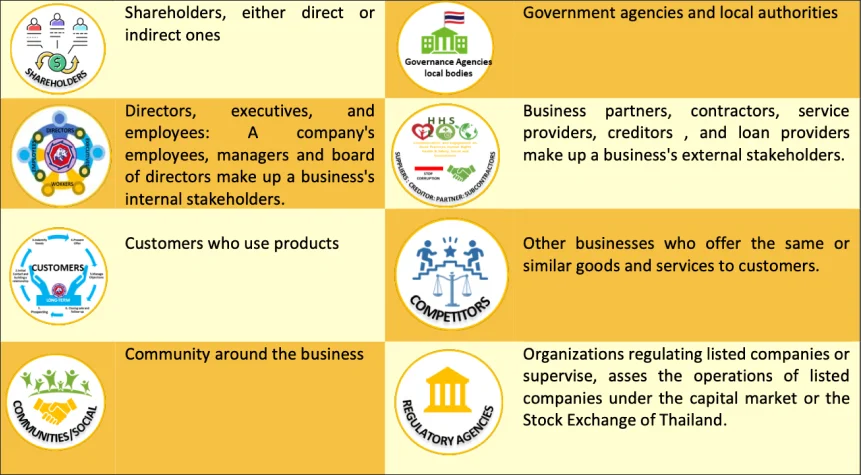
Stakeholder Prioritization
Prioritizing stakeholders involves assessing their level of interest and influence. Stakeholders with a high level of interest and influence should receive more attention and resources than those with low levels of interest and influence.
- Influence refers to the degree of power each individual stakeholder has in setting and modifying the operations of the company measured by a stakeholder’s level of power, authority, expertise, or resources to change or prompt decisions in any area of the company.
- Interest refers to how the stakeholders
are impacted by the operation outcomes without having any power over influencing it. Interest is the degree to which a stakeholder is affected by or interested which is measured by a stakeholder’s level of involvement, their level of concern or commitment, and their perceived benefit or harm.
| Score | Y-axis (Influence) | X-axis (Interest) | ||
|---|---|---|---|---|
| 1 | Low | Low power or influence in determining company outcomes. | Low | Low interest or place little importance on determining company outcomes |
| 2 | Moderate | Moderate power or influence in determining company outcomes. | Moderate | Moderate interest or placing of importance on determining company outcomes. |
| 3 | High | High power or influence in determining company outcomes. | High | High interest or placing of importance on determining company outcomes. |
| 4 | Very high | Great power or influence in determining company outcomes and can halt company operations. | Very high | Very high interest and placing of importance on determining company outcomes and are able to halt company operations. |
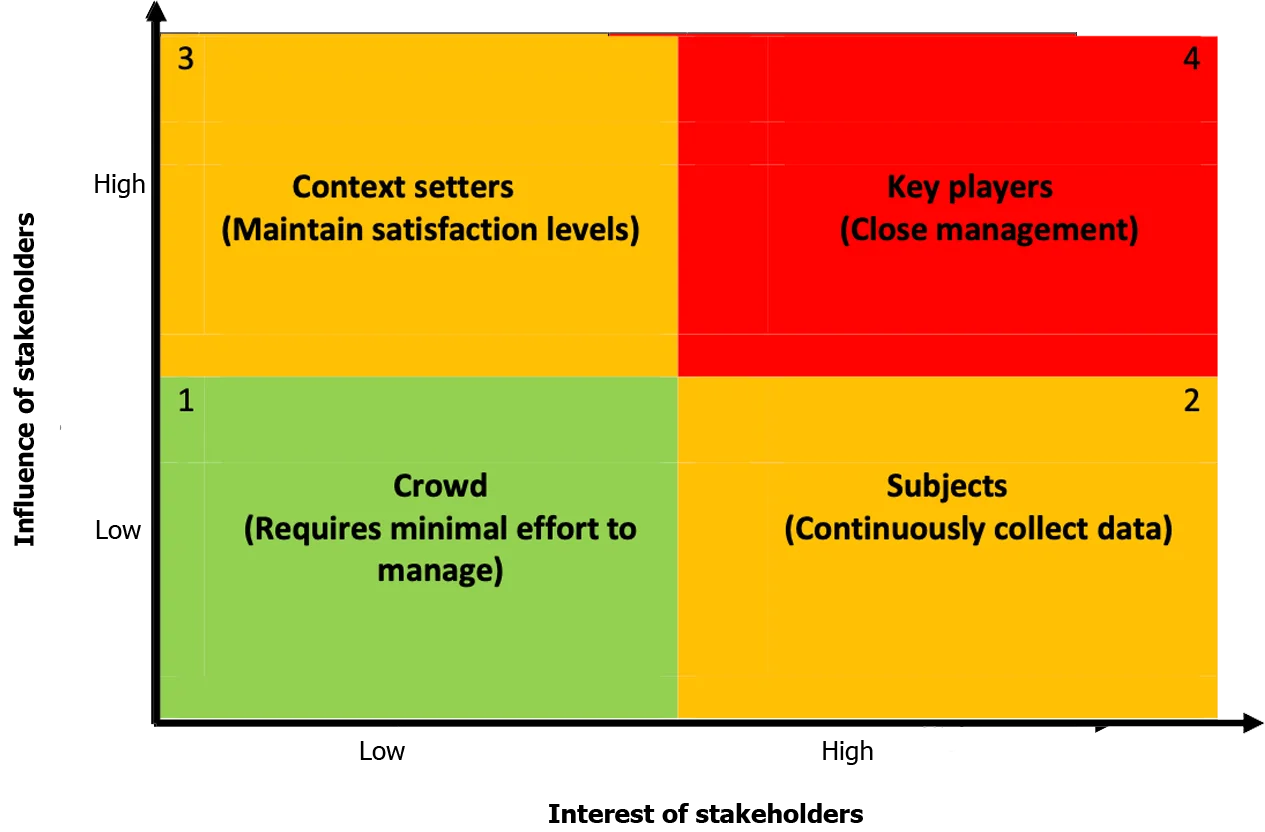
- Players are the high-power, high-interest individuals with whom the Company considers collaborating and keep fully engaged.
- Subjects are the low-power, high-interest stakeholders who can offer great insights and ideas for the Company and its business operations, but the Company can selectively agree or admit.
- Context-setters are high-power, low-interest stakeholders (heads of departments, for example) can have a lot of influence over the operations but don’t want to be involved in the details. Keep them up to date and upgrade them to players.
- Crowd: These individuals will require some ongoing communication about the project’s progress but probably the least of all stakeholders.
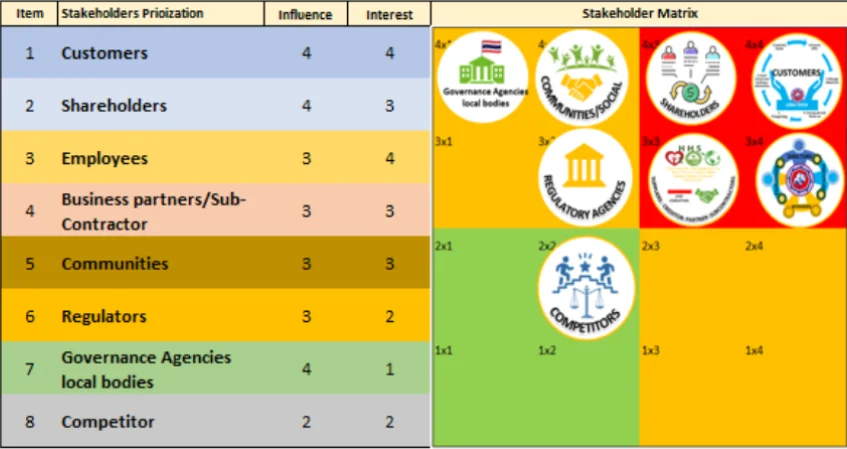
The company has evaluated and prioritized key stakeholder groups using influence and interest assessment principles in preparing engagement activities to create stakeholder participation.
Corporate Compliance Governance Practices
Roles and Responsibilities
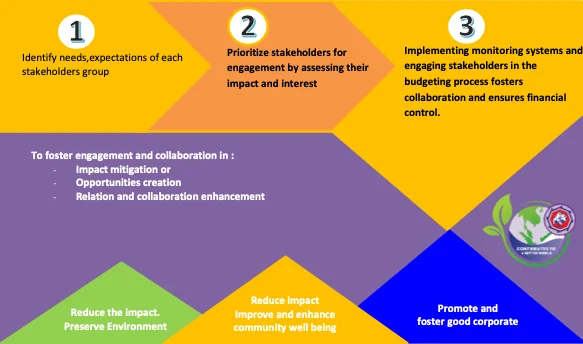
Departmental and unit chiefs whose operations are relevant to each stakeholder group can coordinate with relevant parties such as investor relations, sustainability development work panel and relevant sub-committees such as the Welfare Committee, Environmental Committee, Environmental Governance Team to jointly determine strategies and activities to create engagement with each stakeholder group to
- Set objectives for determining engagement outcomes such as building co creation, providing information, providing information to shareholders and investors, developing relationships, and guiding personnel to reduce operational costs, to reduce greenhouse gases emissions, etc.
- Carry out identifying, prioritizing ,analyzing and mapping engagement activities in accordance with the engagement framework.
SUTHA conducts essentially five levels of engagement with stakeholders: informing, consulting, involving, collaborating, and empowering.
Inform: Provide stakeholders with balanced and objective information to assist them in understanding the ongoing operations, problem, alternatives, threats,opportunities and/or solutions informed in a transparent, correct, reliable manner (There is no opportunity for stakeholder input or decision-making.) via accessible channel.
Consult: Gather feedback on the information given. Consultation involves information exchanges among the stakeholders ; government, the implementing authorities, project executing suppliers, in which level of input can range from minimal interaction (online surveys, etc) to extensive either formal or informal to provide opportunities to give feedback to be considered in the decision- making process
Involve: Work directly with stakeholders during the process to ensure that their concerns and desired outcomes are fully understood and taken into account at each stage. Final decisions are still made by the company, but with well-considered input from stakeholders such as environmental management initiatives taken in the operational establishment areas.
Collaborate: Partner with stakeholders at each stage of the decision-making, including developing alternative solution ideas and choosing the preferred solution together. Goal is to achieve consensus regarding decisions. For examples, to partner with customers in each aspect of the decision including the development of alternatives and the identification of the preferred solution.
Empower: Place final decision-making power in the hands of stakeholders. Voting ballots and referenda are common examples conducted via a general meeting of shareholders and agenda meeting with major shareholders.
| Inform | Consult | Involve / Collaborate / Empower |
|---|---|---|
|
• Public meetings • Briefings • News media • Public Presentations • Info Kiosks • Hotlines • Social media • Websites • Fact sheets • Arts and entertainment |
• Public meetings, hearings, workshops • Focus groups • Study circles • Interviews • Surveys • Opinion polls • Questionnaires • Social media • Social Media • Suggestion boxes • Comment forms |
• Consensus workshops • Study groups • Focus groups • Task Force • Advisory boards, committees • Polling • Votes • Social media |
The Company identifies, prioritizes, and does a mapping of engagement to implement effectively and monitor its outcomes against its goal to report in the annual report and to the board to evaluate the efficiency and allocate budget appropriately.
Participation activities for key stakeholder groups in each group are as follows:
- Stakeholder Engagement : Customers
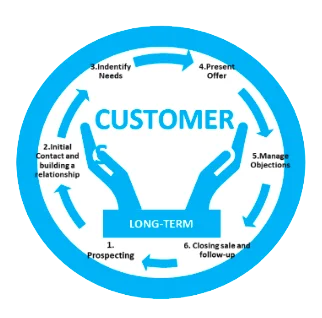
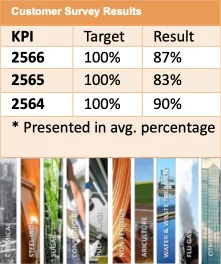
The customer satisfaction survey is effectively and thoroughly applied in measuring and benchmarking customer satisfaction for comprehending customer satisfaction, requirements, and areas for improvement toward product qualifications, packaging, transportation services, the sales document management to meet the expectations of customers in each industry.
- Open Space Meeting : Customer Visit
Aligning with the agenda set by the customer either onsite at the Company or on customers’ sites, our Sales and Marketing representatives are to coordinate with other departments to achieve meeting objectives.
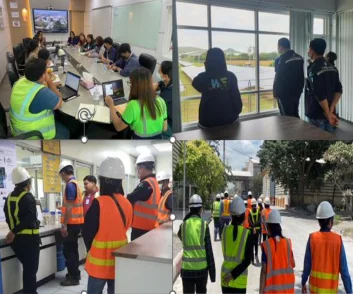
Objective : Two ways of communicating expectations, instructions, process and operations to develop mutual understanding.
Corporate Benefit : Obtaining insights from a focus group
Stakeholders benefit : Experiencing operational process of receiving raw materials, then processing and delivering to customers.
- Open Space Meeting: Participate Suppliers’ events
Respective personnel participated suppliers’ event according to their events’ purpose
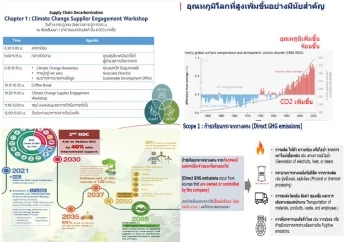
Objective Co creation in value creation and impact mitigation
Corporate Benefit to obtain legal requirements and expectations in CO2 reduction
Stakeholders’ benefit To partner with suppliers
- Participatory action research
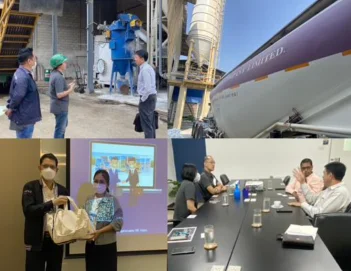
Participatory action research that involves stakeholders as co-researchers, co-designers, or co-implementers of the product development.
Objective To identify issues, solutions, or to forecast future collaboration with customers based on their specific requirements.
Corporate Benefit Obtaining insights to analysis and develop for responding targeted customers’ needs.
Stakeholders’ benefit Securing qualified products and services
- Participatory action research
GLE, a subsidiary, involves its stakeholder as a co-designer of its process development for cost effectiveness

Objective To customize commercial offer to facilitate their particular process and design
Corporate Benefit New commercial service and solution
Stakeholders’ benefit Custom made cost effectiveness, GHG reduction in packaging and transportation process
- Stakeholder Engagement: Shareholders
Meetings of shareholders, SET Opportunity Day
other engaging activities
via concepts and frameworks associated with policy implementation
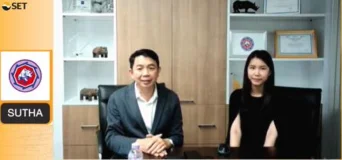
Annual general meeting of shareholders IR and management team participate Opportunities Day arranged by SET
Annual general meeting of shareholders arranged onsite as per shareholders’ preference and to report annual operating results have shareholders vote on critical agenda

Annual general meeting of shareholders arranged onsite as per shareholders’ preference and to report annual operating results have shareholders vote on critical agenda
SET Opportunity Day arranged not less than 2 times a year to communicate operating result.
- Opportunity Day Year End/2022 (3 March 2023)
- Opportunity Day Quarter 1/2023 (26 May 2023)
- Opportunity Day Quarter 2/2023 (29 September 2023)
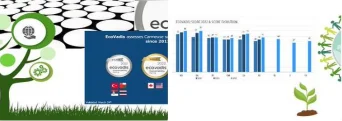
Participated and received “Silver Y2023 and Gold Y2024” certification from Ecovadis
Objective :
- Law compliance in reporting financial position, operating results, and non-financial information of the Company to its shareholders on an equal, regular, complete, and accurate basis.
- Collaboration to develop and value creation and business opportunities.
Corporate Benefit Report operating performance and obtain expectations / opinions
Stakeholders’ benefit To obtain operating results
- Personnel, directors, and executives’ engagement
Employee engagement and employee satisfaction surveys conducted by the Human resources department to assess and analyze for better responding to the needs of personnel.


| 2023 Employee engagement and employee satisfaction surveys | |||||||
|---|---|---|---|---|---|---|---|
| Participation | Results | ||||||
| Target | Performance | Engagement | Happiness at work | Working environment | Value | ||
| 50% | 57% | 8.47 | 8.73 | 8.55 | 8.27 | ||
| Engagement survey | |||||||
| Safety | Company Culture and Mission | Relationships with Manager | Autonomy and Ownership | Working tools | Recognition | Work-life Balance | Rewards |
| 8.99 | 8.93 | 8.88 | 8.80 | 7.71 | 7.93 | 8.09 | 8.06 |
- Shareholders Visit
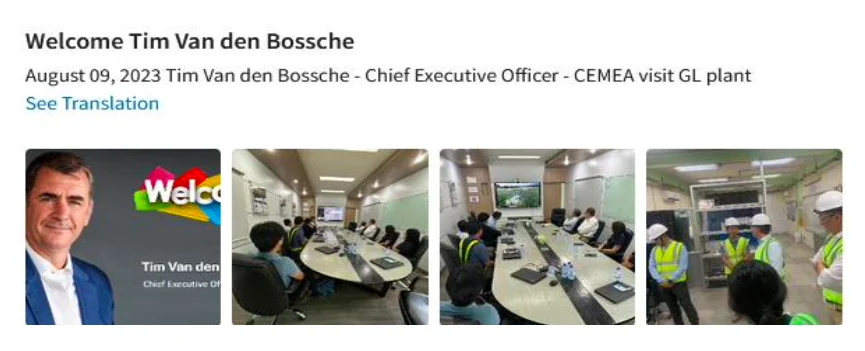
Objective Newly assigned directors by the major shareholder conducted a visit operational establishment.
Corporate Benefit To facilitate onboarding
Stakeholders’ benefit New directors obtain useful and informative data for performing directors’ roles and duty
2023 Cost Saving Program
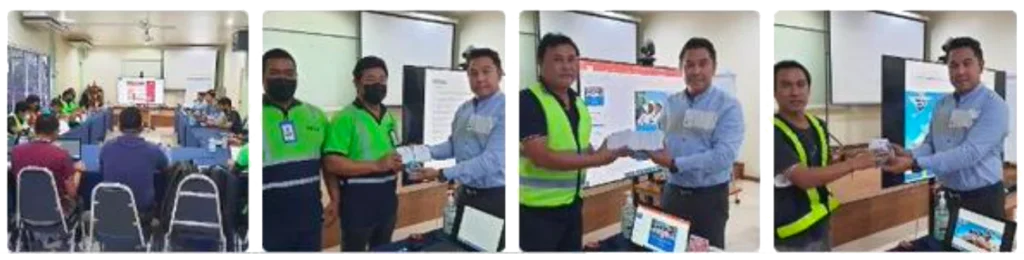
Objective To encourage personnel to create product innovation To create a culture of engagement either with stakeholders or among colleagues via Walk Rally and Team Building to build trust, encourage better communication, reduce conflict, increase productive collaboration, foster creativity and learning for innovation brainstorming via below practical steps.
- Strategy - defining consistent paths and goals.
- Culture - encouraging employees to create new ideas and innovate.
- Process – processes that can measure, reproduce, and result in success.
- Tool & Techniques - tools and techniques used to stimulate innovation.
- Matrices – key performance indicators to assess the performance with traceable capacity.
To obtain cost saving ideas and initiatives for practical use within establishments
Corporate Benefit To obtain cost saving ideas and initiatives for practical use within establishments
Stakeholders’ benefit To participate in creating , sharing, developing initiatives and innovation based on their work routines
Executive engagement with a major shareholder
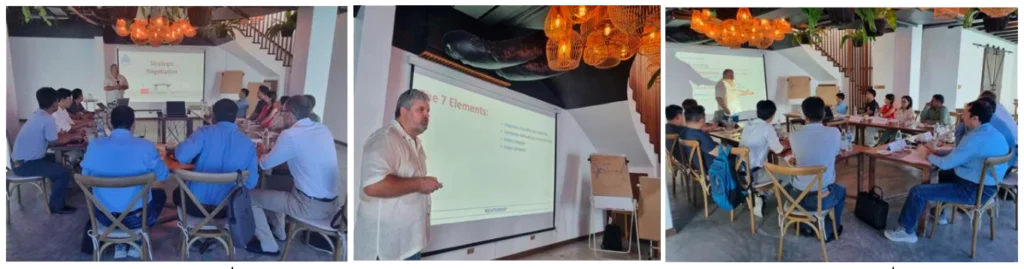
Objective To get involved and engage with executives from a major shareholder in working towards a workshop to increase productive collaboration
Corporate Benefit Personnel development
Stakeholders’ benefit Collaboration and relationship development
Enjoyable activities and events

Objective To boost employee engagement such as gathering events, celebrating new year, to gain more positive atmosphere at work
Corporate Benefit Better atmosphere at work and among personnelb
Stakeholder Benefit Relax and enjoyable activities supported by the Company fund