“To fulfill that purpose”
เรากำหนดat Carmeuse we also have a belief in what it takes to get there, focusing on three factors: People, Technology, and Sustainable Management.
Personnel are a vital and indispensable factor in every success. We are committed to fostering participation at all levels, encouraging collaboration and enthusiasm across our team.
We aspire for every team member to share the same purpose, combining their strengths and abilities to drive our work toward meaningful results.
We seek individuals who are the right fit to join us and move forward together toward our shared goals.
Equipment and capital are secondary factors. We firmly believe that technology and innovation—driven by our people—play a crucial role in advancing our mission.
Our focus is on developing solutions that serve our goals and create value for all our stakeholders.
Our success depends on having engaged, passionate people dedicated to our purpose. We believe that innovation and technology, led by our people, are essential to achieving our goals.
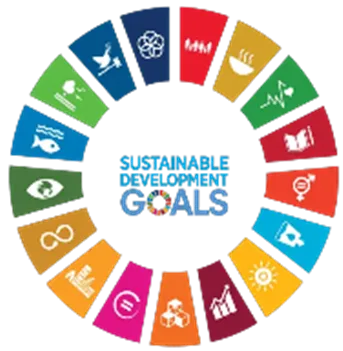
Sustainable management is key for long-term success, and we support the United Nations' 17 Sustainable Development Goals as a framework for positive business impact.
Consequently, optimizing our cash conversion is the first short-term ambition.
Goals
- SHORT-TERM Optimize cash conversion Growth-focused capital allocation
- MEDIUM-TERM Decarbonation techno-ready Return On Capital Employed > 12.5%
- LONG-TERM ลDecarbonated & digital company Sustainable leadership
How
Our approach to achieving our goals begins with cultivating the right behaviors and values within our people.
By strengthening these qualities, we empower our team to drive meaningful impact and generate outcomes that move us closer to our shared objectives.
Promoting and reinforcing all four behaviors across every level of the organization is a shared responsibility of all managers and employees.
Promoting four behaviors among personnel at all levels is the responsibility of every manager and employee believing that everyone will work together to practice, encourage, and establish these behaviors, playing a key role in driving our organization's success. Honest feedback drives continuous learning and improvement through regular, respectful
Sincere feedback is the foundation of learning and self-development, built through respectful, open sharing and listening.
Collaboration means moving forward toward shared goals, embracing diverse perspectives, and strengthening trust within the team.
Ownership means taking genuine responsibility for every task from start to finish, creating value throughout the process.
communication and active listening. Collaboration means working together for shared goals, combining talents, welcoming diverse perspectives, and building trust. Ownership involves handling responsibilities proactively, taking initiative, and being accountable from start to finish delivering value. Passion is pursuing work with enthusiasm and dedication, staying proactive and committed even during challenges.
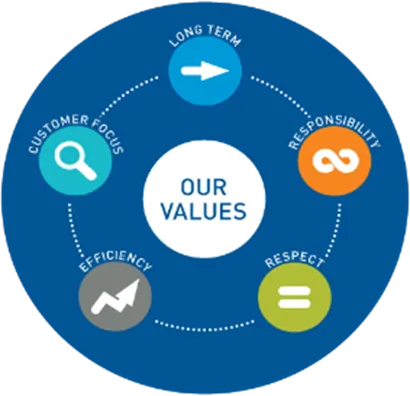
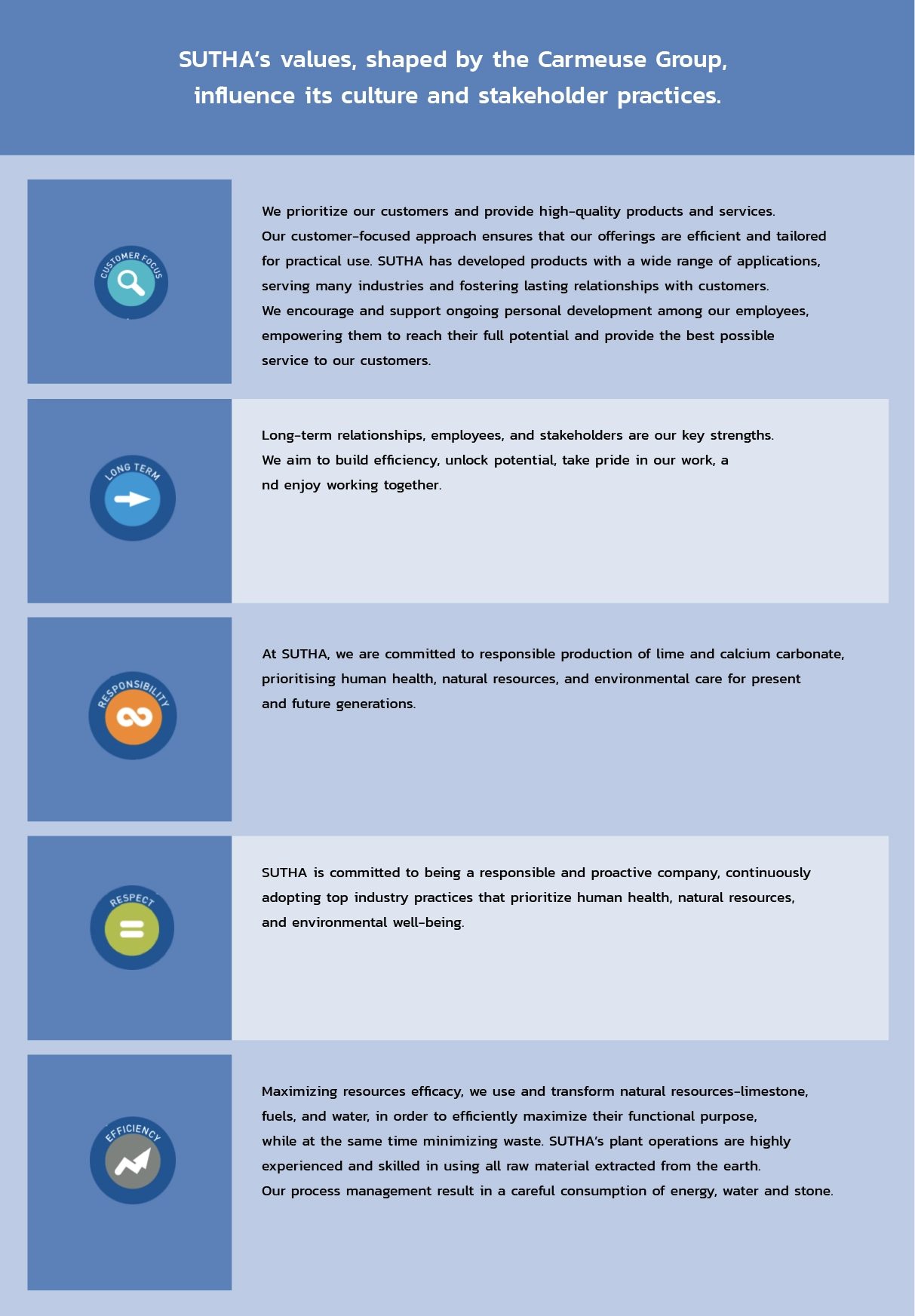
5 core values define our company and guide our operations.
Group Structure and Operations
Business Strategies
The company has developed business strategies to drive the organization meet its objectives within the designated timeline. The strategic framework consists of three tiers: Corporate strategy, Business strategy, and Operational strategy.
Corporate strategy
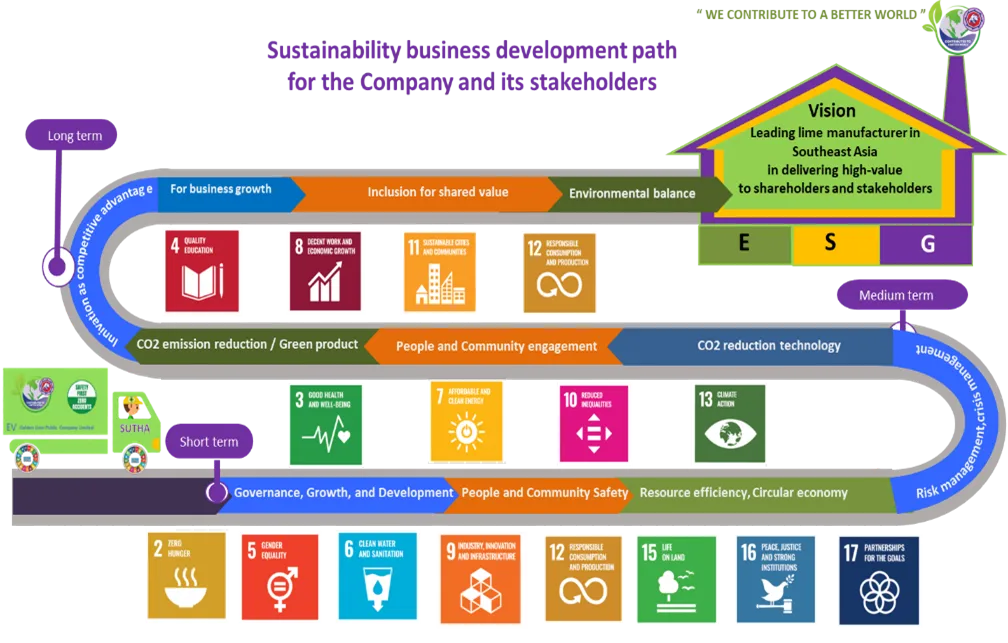
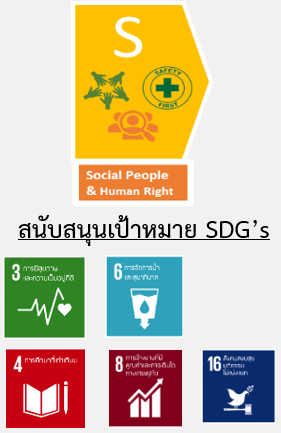
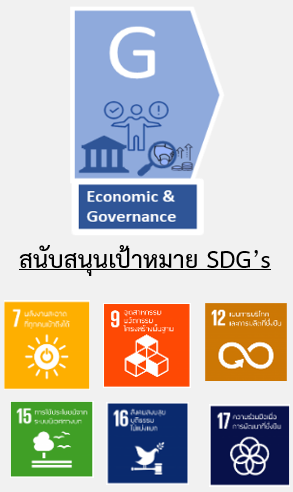
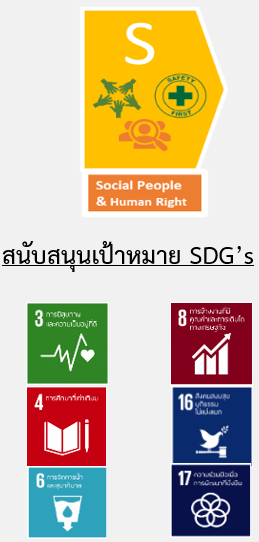
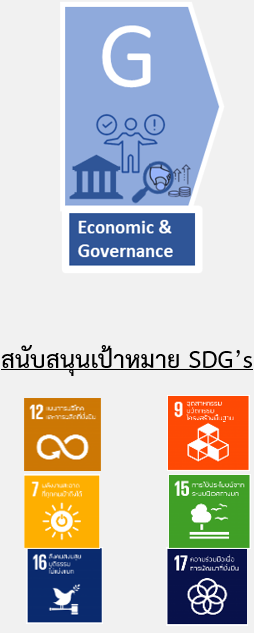
“The three paths to business sustainability of SUTHA”, which the Sustainable Development Committee proposed to the Board of Directors for approval as a strategy for driving and developing sustainability, consisting of 3 aspects: environment (E), society (S) and economy and governance (G) that set goals in the short, medium and long term.
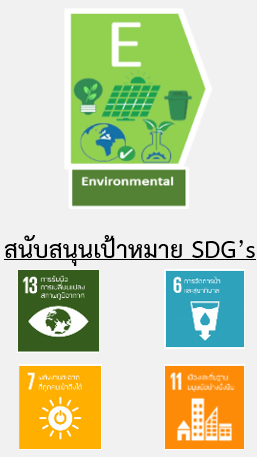
- Resources and Energy management using renewable energy
- Resources optimization
- ควบคุม GHG Scope 1&2 และการจัดเก็บข้อมูลการปล่อยก๊าซเรือนกระจกใน Scope 3
- Circular economy implementation
SDG13, SDG 6 , SDG 7, SDG 11
- Safety as a core value
- Employees knowledge, competence, cooperation development
- Customer relationship enhancement for long-term
- Good recognition for high-value delivery to stakeholders
- Zero LTI
- Zero Human Rights complaint
- Training hours of employees
- Highest customer satisfaction
- Employee satisfaction
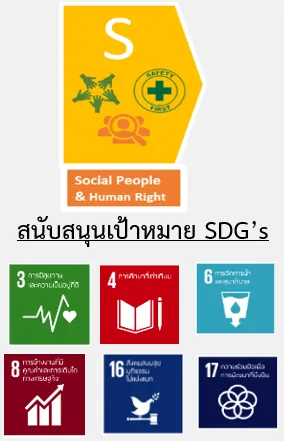
SDG 3, SDG 6, SDG 4, SDG 8, SDG 16
- Financials liquidity
- Prioritized capital allocation and safe investment
- Efficient investment
- Good corporate governance, Business ethics, anti-corruption, laws compliance and sustainability business development
- Value chain management
- Risk and Crisis Management
- Free cash flow
- Financial ratio
- ROI
- Zero laws non-compliance
- Recognized ESG Rating
SDG 7, SDG 9, SDG 12, SDG 15, SDG 16, SDG 17
- การลดปริมาณการปล่อยคาร์บอนของบริษัท
- การจัดเก็บปริมาณการปล่อย GHG ขอบเขต 1 & 2 ของบริษัทย่อย และเก็บข้อมูล GHG ขอบเขต 3 ของบริษัทย่อยก่อนปี 2573
- increase carbon offset.
- Develop green products.
- GHG Scope 1,2,3 และรวมขอบเขตข้อมูลของบริษัทย่อย
- GHG Scope 3 in the supply chain
- Carbon credit
SDG13, SDG 6 , SDG 7, SDG 11
- Safe operations without accidents.
- Attainment of customer satisfaction
- Employees knowledge, competence, cooperation development
- Value chain’s Stakeholders engagement
- Zero LTI
- Zero Human Rights complaint
- Training hours of employees
- Highest customer satisfaction
- Employee satisfaction
SDG 3, SDG4, SDG 6, SDG8, SDG 16 , SDG 17
- Develop technology for CO2 reduction.
- More opportunities from CO2 technologies /Low Carbon Community
- Integrated GRC (Governance Risk Compliance)
- Increased renewable energy.
- Increased market share
- Zero laws of noncompliance
- Recognized ESG Rating
SDG 12, SDG 9, SDG 7, SDG 15, SDG 16, SDG 17
- Biofuel project progression
- Promote green products
- Reduce carbon emissions.
- increase carbon offset.
- Reduced GHG Scope 1&2
- GHG Scope 3 in the supply chain
- ความคืบหน้าของโครงการพัฒนาการใช้เชื้อเพลิงชีวมวล
- Carbon credit
SDG13, SDG 6 , SDG 7, SDG 11
- Safe operations without accidents.
- Attainment of customer satisfaction
- Employees knowledge, competence, cooperation development
- Value chain’s Stakeholders engagement
- Zero LTI
- Zero Human Rights complaint
- Training hours of employees
- Highest customer satisfaction
- Employee satisfaction
SDG 3, SDG4, SDG 6, SDG8, SDG 16 , SDG 17
- Low carbon technologies and systems
- Liquidity and free cashflow
- Opportunities from Digital, Technology, and Innovation
- Good corporate and sustainability governance under international standards
- Increased renewable energy.
- Increased market share
- Zero laws of noncompliance
- Improved ESG rating recognition
SDG 7, SDG 9, SDG 12, SDG 15, SDG 16, SDG 17
Such 3 paths link to the SDG’s goal of sustainability development.
All internal Stakeholders get involved to drive sustainability business development through routine business activities in response to the United Nations Sustainable Development Goals SDG's Goal.
SUTHA has also adopted and adjusted the Carmeuse strategic policy incorporated with the corporate governance of listed companies to support SDG’s Goal. (GRI: 3-3)
To end hunger, achieve food security, improve nutrition,
and promote sustainable agriculture.
Lime and Calcium carbonate application in sugar production, animal feed, fishing, and agricultural industries, solutions to soil acidity and water treatment
- Educate to expand businesses to the agricultural sector.
- Promote the use of lime to improve soil condition.
- Develop business partners for product distribution across all regions
Ensure health and well-being for all andPrioritize the health and welfare of our employees, their families, and the surrounding local communities.
The core strategy of the Company
This objective is considered an integral part of the business strategy that the Group places great importance on.
Lime and Calcium carbonate application in sugar production, animal feed, fishing, and agricultural industries, solutions to soil acidity and water treatment
- Achieve a zero-accident workplace and
- Promote better health of employees and their families.
- Engage with local authorities to develop the quality of life or health of the communities around the business.
Ensure equitable quality education and promote lifelong learning opportunities for all
We are committed to
- Personnel development
- Succession plan
- Knowledge improvement program for both personnel and customers to improve their potential
- Learning opportunities of new technologies and
- Partnering with targeted schools for future personnel and
- Exchange as a Learning Share method.
“Clean water” is essential for life. SUTHA products play a vital role in the treatment of both drinking and wastewater to soften water, neutralize pH, and remove organic impurities and heavy metals.
We are committed to
- to develop water treatment solutions as new product development, acquisitions, and
- expanding operations in new regions, along with
- supporting wildlife conservation activities and promoting the usage of environmentally friendly products among business peers
Ensure access to affordable, reliable, sustainable and modern energy for all
We are committed to
- Clean and renewable energy consumption and
- Energy optimization
Our products play a key role in the production of Solar Glass and the elements of windmills. Additionally, with support from the Carmeuse group, we initiated in
- alternative fuels
- reducing energy consumption
- investing in renewable energy
- efficiency improvements of our customers and partnerships aiming at turning our unavoidable process CO2 emissions into a resource for renewable energy.
Promote inclusive and sustainable economic growth
The core of the Group's sustainability strategy is:
- Prosperity means we establish priorities to sustain long-term profitable growth, which in turn
- provides jobs in our communities, many of which in rural areas, along with opportunities for employee development.
- To support this strategy, we continue to expand and diversify our business through acquisitions and work to develop innovative solutions for future challenges.
Build resilient infrastructure, promote sustainable industrialization and foster innovation.
Our primary business starts with lime and limestone, which have been used in infrastructure projects for thousands of years. Currently, our largest growth segment is in construction, thus making it a key part of our strategic focus.
Our strategy focuses in three areas:
- mergers & acquisitions,
- innovative solutions and expansion of offerings to broaden our portfolio, develop solutions to replace environmental impact of products and
- expand our footprint to support infrastructure projects.
Mitigate social disparities by fostering local employment opportunities, ensuring that compensation is at least equal to the legally mandated minimum wage.
Strategic goal
- Promote local employment
- Provide equal opportunities in employment without gender discrimination.
- Do not pay wages below the minimum legal wages
Making cities safe and sustainable
Strategic Goals:
- Promoting safety of the workplace, customers, communities and stakeholders
- Employees follow safety measures in both the company's workplace and those of customers, communities, society, and stakeholders.
- Arrange safe environment and protective equipment to ensure safety in every establishment and every process
Ensure sustainable consumption and production patterns
It all starts with our quarry management in the most efficient way, and ends with developing innovative uses for all variations of our materials with focus on
- acquisitions, product development and
- operation improvements
- reuse, or
- minimize landfilled materials.
Take urgent action for climate change and its impacts. Carmeuse Group overarching strategy for
- reaching CO2 neutral by 2050, provided that the global team in place focuses on the following five pillars:
1. Energy Efficiency,
2. Alternative Fuels,
3. Asset Base Transformation,
4. Circular Model and
5. CO2Neutral Footprint
SUTHA also drives these five pillars in promoting other businesses to reduce its impact on climate change. Additionally, the Application teams are setup to work with our customers to improve processes and
efficiencies which reduce CO2 impacts.
Protect, restore and promote sustainable use of terrestrial ecosystems
- Planting more trees
- Sustainably manage forests and
- Halt biodiversity loss
Land is considered a factor of business, then it is the responsibility of the business to
- Recover an ecosystem to reflect its intrinsic values
- Restore and enhance biodiversity throughout the life cycle in the quarry management process
- improving water quality
- Planting more trees
- Promote biodiversity through various cooperation to ensure that the ecosystems, communities, and land associated with the business are properly restored.
Promote peaceful and inclusive societies for sustainable development, provide access to justice for all and build effective, accountable, and inclusive institutions at all levels.
Integration is undertaken to comply with the sustainability framework by
1. Implement good corporate governance throughout SUTHA business operations
2. Develop internal controls and risk management throughout SUTHA business operations
3. Develop corporate contingency, emergency plan
4. Develop a mitigation plan for business continuity
5. Involve international standards and practices into business operations
Strengthen the means of implementation and revitalize the global partnership for sustainable development.
Strategic goals in 3 aspects
1. Sustainable value chain management
2. Sustainability policy framework and sustainability goals engagement
3. Sustainability policy framework and sustainability goals stakeholder inclusion
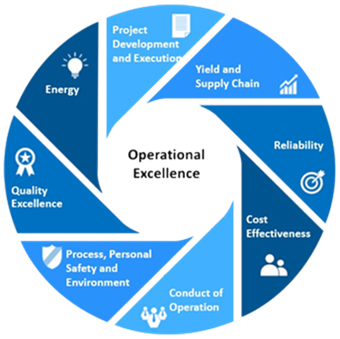
Operational Strategies adhering to Operational Excellence
• Safe Process, Personal Safety and Environment Compliance with the Occupational Safety and Health standards ; implementing safe working procedures throughout the production process and managing environmental practices within the organization, thereby ensuring the highest performance standards in alignment with the organization's safety protocols.
• Quality Excellence Emphasizing manufacturing high-quality products. The ongoing marketing efforts address a variety of market demands to maintain a competitive edge sustainably, while exclusively providing the highest quality offerings.
• Energy Mitigating environmental impact through efficient energy utilization, investing in solar energy, renewable energy, and low-carbon energy initiatives. Additionally, effective management of energy resources is essential to maintain stability and ensure uninterrupted production processes.
• Project Development and Execution Formulate investment initiatives aimed at enhancing processes, ensuring operational continuity, and generating opportunities for business expansion by effectively managing risks and protecting investments until the projects are systematically completed under stringent oversight.
• Yield and Supply Chain Emphasizing the production processes to enhance manufacturing efficiency in order to achieve a competitive edge.
• Reliability Prioritizing the maintenance of machinery for enhancing production efficiency to satisfy market demands.
• Cost Effectiveness Efficiently controlling and managing costs through the utilization of various tools, including Statistical Process Control (SPC) and Lean Manufacturing, aims to enhance the value of products and services while striving for the optimal use of resources.
• Operation to ensure business and operation sustainability by implementing innovative management tools and techniques, which include:
- Strategy defining consistent paths and goals
- Culture Encouraging employees to work together to create new ideas and implement innovations that enhance work, processes, or products.
- Process capable of measuring, replicating, and achieving success.
- Tool & Techniques employed to encourage innovation.
- Matrices Performance metrics to evaluate effectiveness with measurable capacity.
Key Plan and Strategy Updates in the Past Year
- Align Carmeuse’s indirect major shareholders’ strategic goals with the organization’s core objectives to ensure management direction matches key shareholder strategies.
- Four Behaviors value aim to encourage important habits within staff members. These behaviors act as vital principles guiding everyday actions and shaping the broader culture of the organization.
- To comply with the SEC of Thailand’s sustainability disclosure requirements, the company has aligned its strategy with IFRS S1 and S2 standards, which will be mandatory for listed companies by 2030. The plan requires collecting and disclosing GHG emissions data (Scopes 1, 2, and 3) from subsidiaries included in consolidated financial statements. A one-year transition period for Scope 3 disclosure is provided by the SEC.
- Following the revised strategy for sustainability disclosure, as required by the Securities and Exchange Commission (SEC) of Thailand, listed companies will be mandated to comply with sustainability reporting standards under IFRS S1 and IFRS S2, issued by the International Sustainability Standards Board (ISSB). The enforcement for general listed companies is planned for 2030.
These regulations cover the disclosure of greenhouse gas (GHG) emissions, including subsidiaries under consolidated financial statements. Accordingly, the revised plan includes the collection of Scope 1 and Scope 2 GHG data, as well as Scope 3 GHG data from subsidiaries, which must be implemented before 2030. However, the SEC has provided a one-year grace period specifically for Scope 3 GHG data.
- Using biomass materials as fuel in the lime kiln process has been reclassified as a long-term plan due to the higher cost of biomass fuel compared to current options, the lack of government support or incentive programs, and potential risks associated with biomass use.